Top Benefits of Plate-Fin Heat Exchanger in Modern Applications?
In modern engineering, the Plate-Fin Heat Exchanger has emerged as a pivotal solution. Dr. Emily Thompson, a leading expert in thermal management, states, "Optimizing heat transfer efficiency is critical in today's industrial landscape." This technology enhances efficiency while minimizing space and weight.
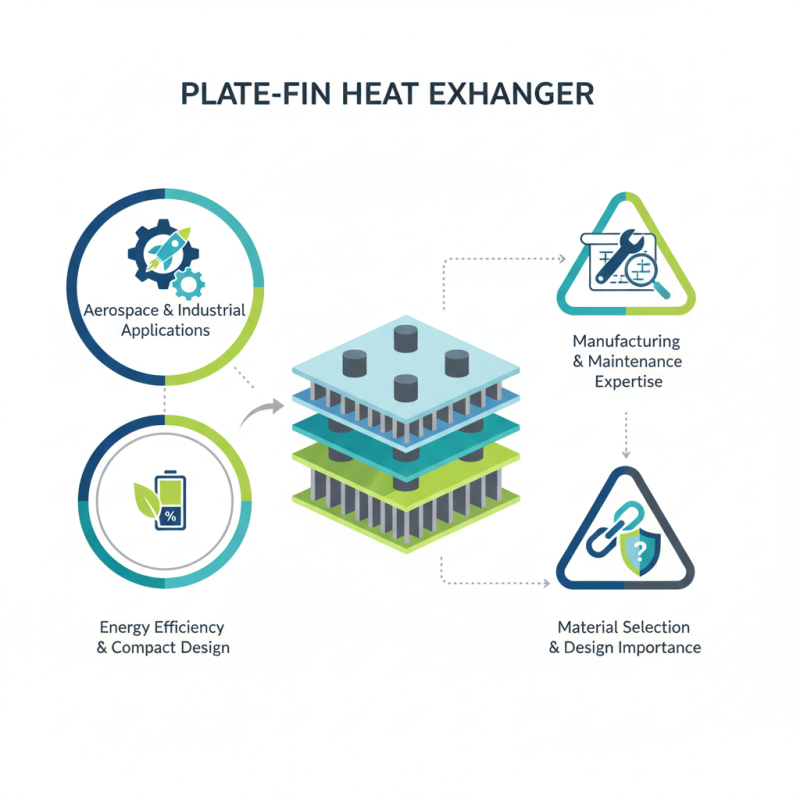
Plate-Fin Heat Exchangers are compact yet powerful. They utilize a unique design that improves thermal performance. This makes them ideal for various applications, from aerospace to HVAC systems. The intricate fin structures create multiple surface areas for heat exchange. This design leads to significant energy savings over time.
However, challenges exist. Manufacturing and maintenance require skilled expertise. Some industries may overlook the importance of proper design and material selection. Failing to address these aspects can lead to inefficiencies. Overall, the Plate-Fin Heat Exchanger represents a crucial advancement, but attention to detail is essential for optimal performance.
Overview of Plate-Fin Heat Exchangers and Their Functionality
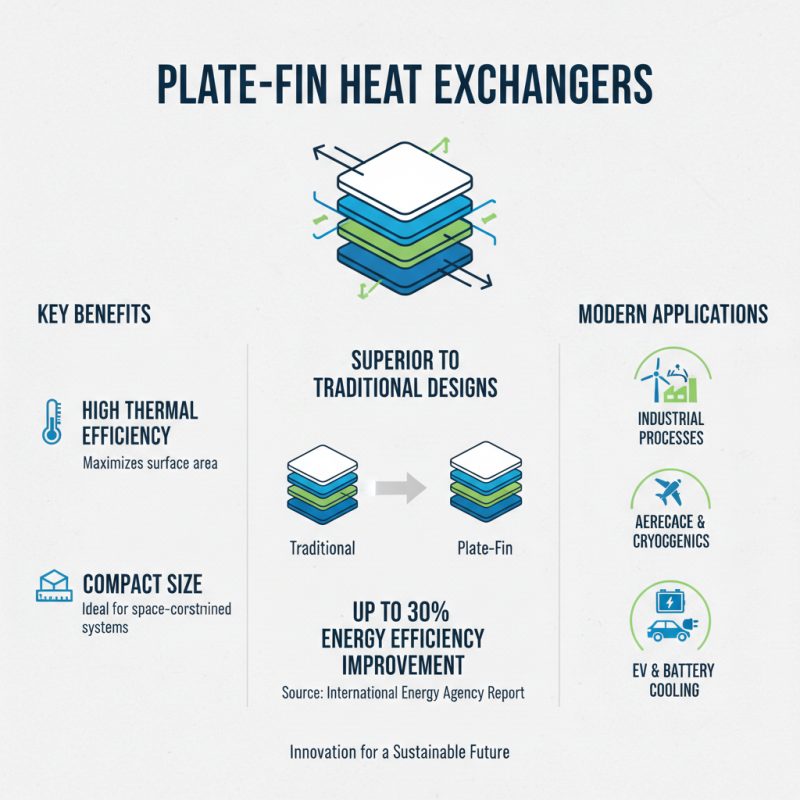
Plate-fin heat exchangers are vital in many modern applications. They offer high thermal efficiency and compact size, making them suitable for space-constrained systems. Unlike traditional heat exchangers, plate-fin designs allow for superior heat transfer by maximizing surface area. According to a recent report by the International Energy Agency, these units can improve energy efficiency by up to 30% in certain industrial processes.
Their functionality revolves around a series of parallel plates and fins, which enhance the heat transfer process. This design allows fluids to flow closely together, promoting efficient energy exchange. Industrial applications include refrigeration, chemical processing, and power generation. However, engineers often face challenges related to fouling, which can decrease efficiency over time.
Despite their advantages, plate-fin heat exchangers require precise design and careful maintenance. Even minor variations in fabrication can lead to performance issues. Reports indicate that while they excel in efficiency, their initial costs can be a barrier for some users. Continuous monitoring and timely interventions are essential to maintain optimal operation and realize the projected efficiency gains.
Key Advantages of Plate-Fin Heat Exchangers in Energy Efficiency
Plate-fin heat exchangers offer significant advantages in modern applications, particularly in energy efficiency. Their compact design allows for a larger surface area in a smaller footprint, enhancing heat transfer capabilities. This feature is essential in industries where space is limited but efficiency is crucial. The increased surface area means that less energy is required to achieve optimal heat exchange, resulting in lower operational costs.
In many settings, these heat exchangers reduce energy consumption, which is a critical factor in sustainability efforts. They can also operate effectively in a range of temperatures and pressures. However, while they are efficient, they can be more complex to maintain than other options. The intricate designs may lead to more frequent inspections and repairs, reflecting their need for careful management. Users might underestimate the importance of regular maintenance, potentially leading to reduced efficiency over time.
Improving energy efficiency is about finding balance. Plate-fin heat exchangers showcase advanced technology that can significantly cut energy costs while requiring diligent upkeep. Their innovative structure allows for versatility across applications, from aerospace to refrigeration. Yet, their dependence on ongoing maintenance poses challenges for users. This necessity for vigilance can be a drawback, highlighting the need for conscientious operation in pursuit of energy efficiency.
Applications of Plate-Fin Heat Exchangers in Industrial Processes
Plate-fin heat exchangers are versatile devices used in various industrial applications. Their compact design makes them ideal for space-constrained environments. In chemical processing, they efficiently transfer heat between fluids, optimizing energy use. This efficiency can reduce costs and improve overall production rates. However, one must consider maintenance challenges associated with these systems.
In the aerospace industry, plate-fin heat exchangers are crucial for cooling engines and managing high temperatures. Their ability to withstand extreme conditions ensures safety and reliability. Yet, potential issues may arise from fouling or corrosion, requiring careful monitoring. Engineers often debate the best materials to enhance durability while minimizing weight.
Additionally, plate-fin heat exchangers are used in oil and gas industries for gas-to-liquid heat transfer. These exchangers help recover waste heat, which is beneficial for sustainability. Despite this, the installation process can be complex, often leading to delays. With ongoing innovations, these challenges prompt manufacturers to reflect on the balance between performance and practicality.
Comparison of Plate-Fin Heat Exchangers with Traditional Heat Exchangers
Plate-fin heat exchangers offer significant advantages over traditional heat exchangers. Their compact design makes them ideal for space-limited applications. According to industry data, they can achieve efficiencies 20-30% higher than shell-and-tube designs. This means they transfer heat more effectively, which can lead to lower energy costs.
One major difference lies in their construction. Plate-fin exchangers utilize thin plates and fins to enhance heat transfer. This results in a greater surface area within a smaller volume. However, this intricate design can also increase maintenance challenges. It may require more frequent cleaning due to fouling. Even minor blockages can significantly impact heat transfer efficiency.
In high-temperature or high-pressure environments, plate-fin exchangers excel. They handle larger temperature differences without significant performance loss. Despite their benefits, they can also be more sensitive to flow rates. Deviation from recommended conditions may lead to reduced efficiencies. Understanding these nuances is critical for proper utilization in industrial settings.
Top Benefits of Plate-Fin Heat Exchanger in Modern Applications
| Feature |
Plate-Fin Heat Exchanger |
Traditional Heat Exchanger |
| Heat Transfer Efficiency |
High efficiency due to enhanced surface area |
Lower efficiency with larger units required |
| Space Requirement |
Compact design allows for space-saving installation |
Larger footprint needed, taking up more space |
| Weight |
Lightweight structure |
Heavier due to bulkier materials |
| Maintenance |
Easier maintenance with accessible design |
More complex maintenance procedures |
| Cost |
Higher initial cost but lower operational costs |
Lower initial cost but potentially higher operational costs |
Future Trends and Innovations in Plate-Fin Heat Exchanger Technology
Plate-fin heat exchangers are evolving rapidly. Their design and structure are becoming more efficient with each iteration. This advancement aims to enhance heat transfer performance while reducing overall size. The use of advanced materials, like composites, is increasingly common. These materials can withstand higher pressures and temperatures, extending the lifecycle of exchangers.
Future trends also lean towards automation. Smart sensors integrated within these systems can monitor performance in real-time. This allows for immediate adjustments, optimizing energy consumption. Increased integration with renewable energy sources is another focus. Researchers are exploring ways to utilize waste heat from industrial processes effectively.
Nonetheless, challenges remain. The complexity of these systems can lead to high initial costs. Maintenance requirements must also be reconsidered, as intricate designs may complicate serviceability. As technology progresses, balancing innovation and practical application becomes crucial. Solutions must remain accessible and manageable for widespread adoption.
Top Benefits of Plate-Fin Heat Exchanger in Modern Applications