How to Calculate Heat Exchanger Cost Efficiently?
In the process of industrial design and optimization, calculating heat exchanger cost effectively is crucial. A recent study by the Heat Exchanger Industry Association indicates that heat exchanger costs can account for up to 40% of total system costs in energy applications. This emphasizes the need for accuracy in estimating these expenses.
Understanding the variables influencing heat exchanger costs is essential for engineers and project managers. Factors such as material selection, design complexity, and manufacturing techniques significantly impact overall expenses. According to industry reports, a poorly estimated heat exchanger cost can lead to budget overruns and project delays.
Efficiency in calculating heat exchanger costs requires a blend of experience and technical knowledge. Even seasoned professionals sometimes overlook critical aspects, leading to inaccuracies in cost assessments. A comprehensive approach is necessary for a reliable estimation process. Thus, reflecting on existing practices and adapting strategies can enhance overall project efficiency.
Factors Influencing Heat Exchanger Cost Calculation Methods
Calculating heat exchanger costs efficiently involves several key factors.
Material selection plays a crucial role in determining overall costs.
According to industry data, stainless steel can increase costs by up to 30% compared to carbon steel.
The choice of material impacts not only the initial cost but also the longevity and maintenance expenses over time.
Corrosive environments may demand more expensive materials, which can be worthwhile in the long run.
Design complexity is another factor influencing cost.
Custom designs, while potentially more efficient, can significantly raise initial investments.
Reports indicate that standard designs are about 20% cheaper than bespoke solutions.
Additionally, process parameters such as temperature and pressure must be considered.
Cost estimations can vary dramatically based on operational settings. For instance, higher pressures may require more robust designs, leading to cost increases of upwards of 15%.
Furthermore, manufacturing techniques can affect cost calculations. Advanced methods, such as laser cutting, may offer precision but at a higher price point.
Simple fabrication techniques often lead to cost savings, although they might compromise efficiency.
Not addressing these influences in cost calculations could lead to budget overruns and project delays.
It’s essential to weigh short-term costs against long-term benefits.
Common Heat Exchanger Types and Their Cost Implications
Heat exchangers are crucial in various industries. Each type has unique cost implications. Understanding these can aid in budgeting and planning.
Common types include shell and tube, plate, and finned-tube heat exchangers. Shell and tube are versatile but can be costly. They are great for high-pressure applications. Plate heat exchangers are compact and efficient. However, they may require more maintenance. Finned-tube exchangers excel in air cooling applications. They tend to be inexpensive, but less effective in high-temperature scenarios.
**Tip:** Always consider the specific application when choosing a heat exchanger. The right choice can lead to long-term savings.
Another factor is material selection. Stainless steel is durable, but may raise costs. Carbon steel is cheaper but can corrode. Evaluate the environment where the exchanger will operate. Proper analysis prevents underperformance and unexpected expenditures.
**Tip:** Compare quotes from multiple suppliers. This can help you find the best deal. Balancing quality and cost is key.
Reflect on your choices carefully. Choosing the wrong type or material could lead to operational setbacks. The upfront expense is important, but the total ownership cost matters more in the long run.
Overview of Material Costs in Heat Exchanger Manufacturing
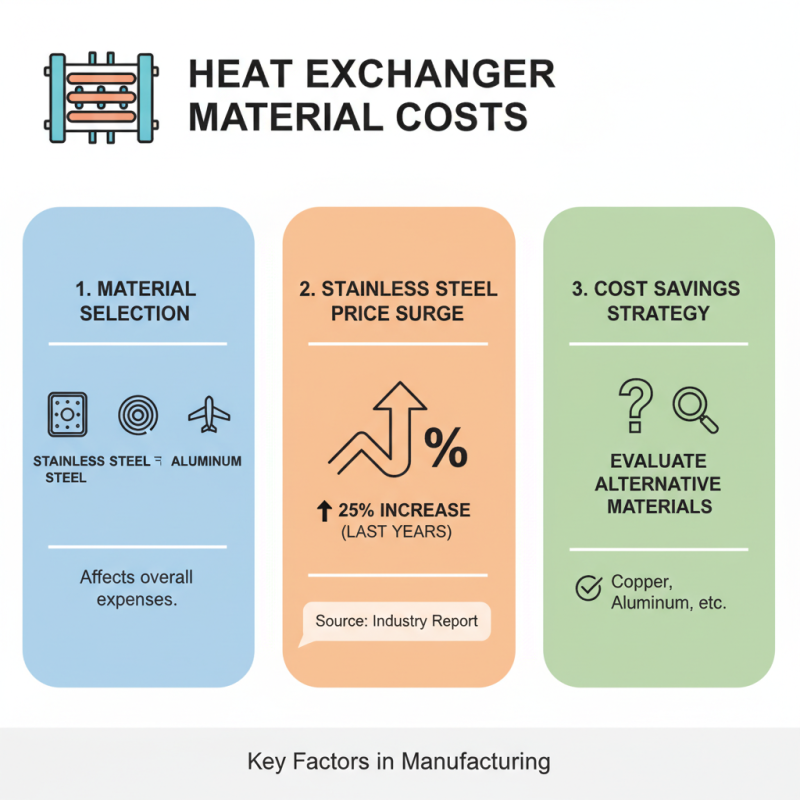
When evaluating material costs in heat exchanger manufacturing, various factors come into play. First, material selection significantly affects overall expenses. Common materials include stainless steel, copper, and aluminum. According to a recent industry report, stainless steel prices have risen by 25% over the past two years. This surge makes it essential to consider alternative materials that may offer cost savings.
Tips: Regularly monitor market trends. Prices can fluctuate. Knowing these changes helps in making informed decisions.
The design of the heat exchanger also impacts material usage and cost. Complex designs often lead to increased material waste, affecting the budget. Engineering considerations, such as wall thickness and surface area, are crucial. A report by the Heat Exchange Society shows that optimizing design can reduce material costs by up to 15%.
Tips: Engage in early design reviews. This can minimize costly alterations later. Be ready to adapt designs based on material availability.
Finally, sourcing strategies play a vital role. Collaborative relationships with suppliers can lead to better pricing. Bulk purchasing can also yield discounts, provided the materials can be stored without degradation. However, this requires careful inventory management to avoid overstocking.
Estimating Labor and Installation Costs for Heat Exchangers
Estimating labor and installation costs for heat exchangers involves several factors. Skilled labor often commands a higher rate. The complexity of the installation can also impact these costs. For instance, if the site has limited access, it might require more time and effort. Transporting equipment in tight spaces can add unexpected expenses.
Another crucial aspect is the experience of the installation team. A well-trained crew can work more efficiently. They can also troubleshoot problems quickly, which saves time. However, inexperienced workers might lead to delays and costly mistakes. This unpredictability can be frustrating for project managers.
Don’t overlook the importance of planning. Careful planning helps you foresee potential issues before they arise. It can minimize labor costs by ensuring that everything runs smoothly. Yet, some may underestimate these preparations. This could result in overspending and inefficiencies. Reflecting on previous projects can provide insights and improve future estimates.
Making adjustments based on past experiences will lead to more accurate budgeting.
Comparative Analysis of Lifecycle Costing for Heat Exchangers
When assessing the lifecycle costing of heat exchangers, it's crucial to consider various factors. Initial purchase price, installation, and maintenance are key components. A thorough analysis should include operational energy costs and possible downtime. These factors can significantly impact overall expenses.
Tips: Always account for energy efficiency. Heat exchangers that perform better may have a higher upfront cost but save money over time. Explore warranties and service agreements as they play a role in long-term expenses.
Another aspect to consider is the potential for unexpected repairs. Some models may be more prone to fail due to design flaws. Analyzing the total lifecycle costs helps in making informed decisions. Use tools or software for accurate calculations. They can simplify the process and reveal hidden costs.
Tips: Review historical performance data before choosing a model. Talk to operators or technicians who have experience with specific heat exchangers. Their insights might highlight issues you wouldn’t expect.
Heat Exchanger Lifecycle Cost Analysis
This chart illustrates the comparative costs associated with different aspects of heat exchangers throughout their lifecycle, including materials, manufacturing, installation, maintenance, and operational expenses. Understanding these costs can help in making informed decisions for cost efficiency in heat exchanger utilization.