How to Estimate Heat Exchanger Cost Effectively?
Estimating the Heat Exchanger Cost can be a daunting task for many engineers and procurement specialists. John Smith, a recognized expert in thermal systems, once stated, "Understanding the cost drivers in heat exchangers is essential for accurate budgeting." This insight emphasizes the importance of a thorough evaluation of various factors influencing cost.
The estimation process involves several variables, including materials, design complexity, and manufacturing methods. Each choice affects the overall budget significantly. For instance, opting for titanium instead of stainless steel can dramatically increase costs. Buyers often overlook these details, leading to budget overruns. Focusing on efficiency can yield better estimates.
As industries evolve, modern tools like AI play a role in reducing uncertainties in estimating. Innovations streamline supplier selection and help navigate the myriad of options available. However, relying solely on technology may lead to oversight of critical nuances in projects. Effective estimation requires both advanced tools and human expertise to avoid pitfalls and ensure precise budgeting for heat exchangers.

Understanding the Factors Influencing Heat Exchanger Costs
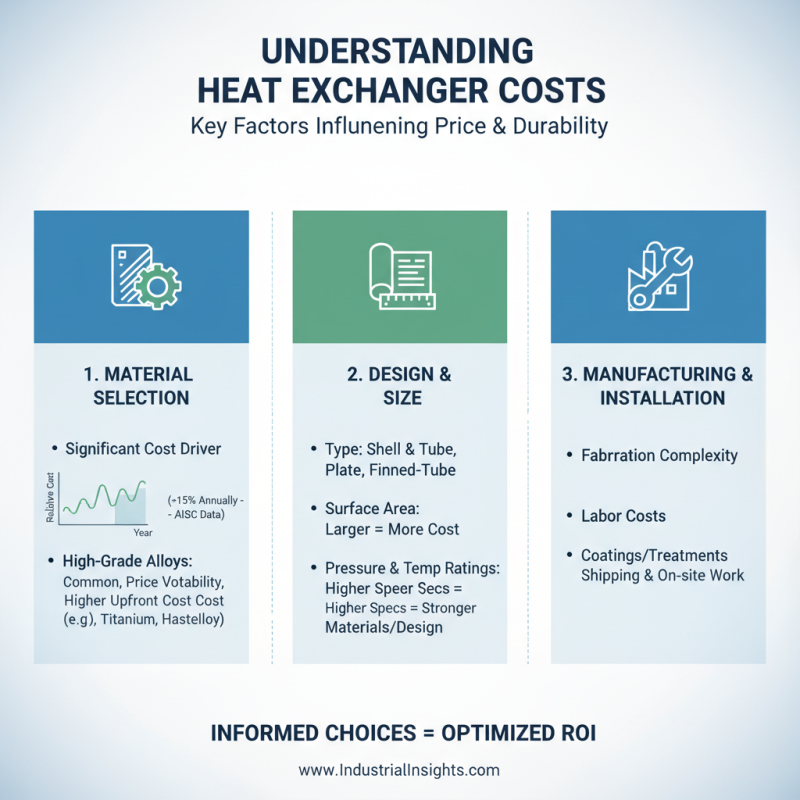
Estimating heat exchanger costs requires a clear understanding of several key factors. Material selection plays a significant role. For instance, stainless steel costs can vary widely based on current market prices. According to the American Institute of Steel Construction, stainless steel prices can fluctuate by 15% annually. Opting for higher-grade materials can lead to increased durability but also higher upfront costs.
Manufacturing processes also influence costs. Different fabrication methods, like welded or brazed designs, impact labor and time expenditures. Industry data suggests that labor costs account for 20-30% of total production costs for heat exchangers. Additionally, custom designs can add complexity, often leading to longer lead times and increased expenses. Standardized models tend to be more cost-effective due to efficiency in production.
Another factor is the operating environment. Heat exchangers used in corrosive or high-temperature applications often require special coatings, which can add to the initial cost. A report from the Chemical Engineering magazine indicates that operational efficiency often justifies these expenses, as they lead to reduced maintenance over time. Each project presents unique challenges that could affect the overall assessment of costs. Balancing quality against budget constraints is an ongoing reflection for many engineers.
Key Methods for Evaluating Heat Exchanger Costs Effectively
Estimating heat exchanger costs effectively requires a strategic approach. One method is analyzing design specifications. Key parameters include materials, size, and operational conditions. According to a recent industry report, material selections can influence costs by as much as 40%. Stainless steel, for example, often enhances durability but raises initial expenses significantly.
Another crucial aspect is the construction complexity. Simplified designs can reduce fabrication costs. A hesitation here can lead to higher expenditures down the line. For instance, intricate designs may attract skilled labor costs that exceed initial forecasts. A survey conducted by an engineering consortium noted that 30% of projects exceed budgets due to unforeseen complexities.
Operational efficiency must also be factored in. Selecting a heat exchanger that aligns with future energy needs can yield long-term savings. A report by the Thermal Management Association highlights that optimizing a heat exchanger's operational efficiency can lead to reductions in energy consumption by up to 25%. There’s a need for careful assessment. Misjudging these factors can lead to overspending, which is an area for reflection in many projects.
Applying Industry Standards in Heat Exchanger Cost Estimation
Estimating heat exchanger costs accurately is crucial for project budgeting. Utilizing industry standards can significantly enhance this process. Analyzing similar projects from the past is a useful starting point. Historical data provides a benchmark for expenses associated with materials and labor. It's important to adapt these figures to current market conditions. Prices fluctuate, and those changes will directly impact your estimates.
Using standardized cost estimation methods adds consistency. Tools like the Heat Exchanger Design Handbook outline common practices. These guidelines ensure that all critical aspects of costs are considered. Design complexity, size, and materials will all influence the final numbers. Each project is unique, but these benchmarks offer a valuable reference point.
However, not all projects fit neatly into standardized categories. Unique requirements may necessitate adjustments. Understanding the limitations of these standards is essential. Engage with experienced professionals who can provide insights into cost variations. Often, overlooked details can lead to budget overruns. Reflecting on past mistakes helps refine future estimates. A cautious approach can stave off unexpected costs.
Utilizing Software Tools for Accurate Cost Calculation
Estimating heat exchanger costs can be challenging. However, leveraging software tools makes this process easier. These tools provide valuable insights into material expenses, labor costs, and design configurations. Accurate cost calculation is critical in project budgeting.
Using software, you can input specific parameters. For instance, the size and type of the heat exchanger affect the overall cost. Adjusting these variables helps clarify potential budgets and trim unnecessary calculations. But remember, even the best software may not account for every variable. Local regulations and unexpected installation challenges often arise.
Another advantage of utilizing software is its ability to track historical data. Analyzing past projects offers practical perspectives on cost variations. However, recent market fluctuations can skew results. Regularly updating your software helps minimize inaccuracies. This highlights the importance of continuous learning in cost estimation. Your approach may need adjustment as you gain experience and insight.
Heat Exchanger Cost Estimation Data
| Heat Exchanger Type |
Material |
Estimated Cost ($) |
Efficiency (%) |
Application |
| Shell and Tube |
Stainless Steel |
12,000 |
85 |
Oil Refinery |
| Plate |
Carbon Steel |
8,500 |
90 |
Food Processing |
| Air Cooled |
Aluminum |
15,000 |
92 |
HVAC Systems |
| Double Pipe |
Copper |
5,000 |
80 |
Small Scale Heating |
| Spiral |
Titanium |
20,000 |
88 |
Marine Applications |
Comparing Quotes from Multiple Heat Exchanger Suppliers
When estimating the cost of heat exchangers, obtaining quotes from various suppliers is essential. Comparing prices helps ensure you are getting a fair deal. However, not all quotes are straightforward. Vendors may have different pricing structures and specifications. This can lead to confusion, making it harder to choose the right option.
Gathering multiple quotes is only part of the process. It's crucial to analyze each estimate carefully. Look beyond just the price. Consider factors like delivery time and installation costs. Sometimes, a lower price may mean higher long-term expenses. For instance, cheaper materials might compromise efficiency. This can result in increased energy costs down the line.
It's worth reflecting on your priorities. Are you seeking the best upfront price or the best long-term value? This question is important yet often overlooked. Engaging multiple suppliers also opens up opportunities for negotiation. A well-informed choice can lead to significant savings and improved performance for your heat exchanger system.