Top 10 Microchannel Heat Exchangers for Global Buyers?
In the rapidly evolving HVAC and refrigeration markets, Microchannel Heat Exchangers have emerged as a critical innovation. According to a recent report by Research and Markets, the global microchannel heat exchanger market is projected to reach USD 1.57 billion by 2026, growing at a compound annual growth rate (CAGR) of 10.2%. This growth is driven by the increasing demand for energy-efficient systems and compact designs.
Dr. Emily Gonzalez, a recognized expert in thermal management systems, notes, "Microchannel technology offers superior heat transfer capabilities while minimizing refrigerant usage." Her insights highlight the efficiency gains this technology brings to various applications. However, the industry still faces challenges such as manufacturing complexity and the need for further research on material durability.
Despite these hurdles, investments and advancements in microchannel heat exchanger designs are substantial. Buyers globally are encouraged to explore new options, balancing cost and performance. The top microchannel heat exchangers can significantly benefit those seeking efficiency and innovation. As the market grows, staying informed about these technologies becomes crucial for making better choices.

Overview of Microchannel Heat Exchangers and Their Applications
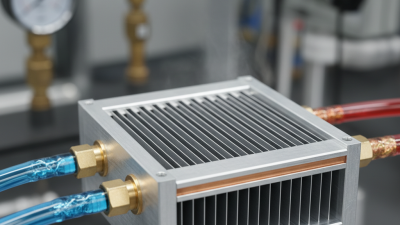
Microchannel heat exchangers are gaining traction in various industrial applications due to their compact design and high efficiency. These devices utilize multiple small channels to enhance heat transfer performance, a feature particularly beneficial in sectors like HVAC, automotive, and refrigeration. Recent studies from the International Institute of Refrigeration suggest that microchannel systems can improve energy efficiency by up to 30% compared to traditional heat exchangers.
The areas of application are diverse. In the HVAC industry, microchannel heat exchangers reduce the refrigerant charge needed, promoting environmentally friendly practices. Additionally, in automotive applications, they contribute to lighter vehicles, which improves fuel efficiency. However, challenges such as sensitivity to manufacturing defects and corrosion resistance require careful consideration. Even with these hurdles, the global microchannel heat exchanger market is projected to reach $5 billion by 2025, as reported by MarketsandMarkets.
Despite their advantages, the transition to microchannel technology is not without its issues. Some users have reported difficulties in maintenance and repair due to the compact design. Furthermore, the initial cost can be higher compared to conventional options. Evaluating these factors is crucial for buyers. Embracing microchannel technology requires weighing its efficiency against potential drawbacks.
Criteria for Selecting the Best Microchannel Heat Exchangers
When selecting the best microchannel heat exchangers, consider several crucial factors. Efficiency is paramount. A highly efficient design ensures better heat transfer and lower energy consumption. Look for models that prioritize compact configurations, enabling optimal performance in limited spaces.
Material quality is another vital criterion. The durability of the heat exchanger depends heavily on the materials used. Corrosion-resistant materials can greatly enhance the lifespan of the unit. Additionally, verify compliance with industry standards for quality assurance. Testing results can provide insights into reliability.
Installation and maintenance are often overlooked but are essential for long-term satisfaction. A user-friendly design simplifies both the installation process and routine maintenance checks. Evaluate the manufacturer's documentation and support options. Such details can greatly impact the user experience and operational effectiveness over time. Keep these factors in mind when making your decision; they can make a significant difference in your overall satisfaction.
Top 10 Microchannel Heat Exchangers: Features and Specifications
Microchannel heat exchangers are rapidly gaining traction in various industries due to their compact design and enhanced efficiency. Recent industry reports indicate that the microchannel technology market is expected to grow significantly, with a projected CAGR of over 12% from 2022 to 2028. These heat exchangers are primarily favored for their lightweight structures, which can save space and reduce material costs.
The specifications for these microchannel systems include a reduced footprint, making them ideal for applications in automotive and HVAC sectors. Typically, they feature channels smaller than 1 mm. This size promotes efficient fluid flow and rapid heat transfer. According to the Energy Efficiency and Renewable Energy Program, microchannel heat exchangers offer around 25% more efficient performance than traditional designs. However, potential buyers must consider challenges such as maintenance and compatibility with existing systems.
Quality control is another area needing attention. While many microchannel heat exchangers boast high thermal efficiency, the manufacturing process must be precise. Inconsistent production quality can lead to leaks and decreased reliability. Additionally, the integration into larger systems can pose a challenge due to varying thermal properties. Buyers should evaluate these factors closely when selecting heat exchangers for their applications.
Top 10 Microchannel Heat Exchangers - Features and Specifications
Market Trends and Innovations in Microchannel Heat Exchanger Technology
Microchannel heat exchangers are gaining traction in various industries due to their improved efficiency. Recent reports indicate that these devices can achieve thermal efficiencies up to 30% higher than traditional heat exchangers. The compact design and enhanced surface area facilitate better heat transfer, making them suitable for applications in HVAC and automotive sectors.
Market trends reveal a shift towards environmentally friendly refrigerants. The use of low-GWP (Global Warming Potential) materials is becoming standard. This change is driven by regulations aimed at reducing the carbon footprint of cooling systems. Additionally, innovations such as advanced manufacturing techniques are lowering production costs while enhancing performance, potentially increasing adoption rates.
Tip: When selecting a microchannel heat exchanger, consider compatibility with refrigerants. Ensure that the materials used can withstand the operating conditions of your system.
Emerging technologies are also paving the way for greater customization. Manufacturers are now able to tailor designs to meet specific customer needs. However, challenges persist in achieving standardization across different applications. Addressing these gaps will be crucial for wide-scale adoption in the coming years.
Tip: Keep an eye on industry certifications. Compliance with standards can indicate reliability and performance.
Key Manufacturers and Suppliers of Microchannel Heat Exchangers
Microchannel heat exchangers are gaining prominence due to their efficiency and compact design. These systems offer significant advantages in various applications, including HVAC and refrigeration. Leading manufacturers in this field prioritize innovation and sustainability. They understand that energy efficiency is crucial for global buyers.
Key suppliers often emphasize customized solutions tailored to specific industrial needs. They leverage extensive industry knowledge to address unique client requirements. Many of these companies maintain rigorous quality standards. However, there are challenges, such as varying regulatory environments across regions. This can complicate the manufacturing and certification processes.
Continuous improvement remains a focal point for these manufacturers. Yet, feedback from clients sometimes highlights areas for growth. Some heat exchangers may not perform optimally under specific conditions. Engineers must consider factors like fluid properties and operating temperatures. This underscores the importance of thorough testing and validation. Ultimately, understanding the landscape of microchannel heat exchangers is essential for informed decision-making.
Top 10 Microchannel Heat Exchangers for Global Buyers
| Rank |
Type |
Material |
Application |
Cooling Capacity (kW) |
Efficiency (%) |
Dimensions (mm) |
| 1 |
Compact Microchannel |
Aluminum |
Refrigeration |
15.0 |
90 |
300 x 200 x 100 |
| 2 |
Plate Microchannel |
Copper |
HVAC |
20.0 |
92 |
400 x 300 x 150 |
| 3 |
Flat Microchannel |
Stainless Steel |
Industrial Cooling |
25.0 |
88 |
500 x 350 x 200 |
| 4 |
Round Microchannel |
Aluminum |
Automotive |
30.0 |
91 |
600 x 250 x 150 |
| 5 |
U-Tube Microchannel |
Copper |
Process Cooling |
18.0 |
89 |
700 x 400 x 300 |
| 6 |
Diagonal Microchannel |
Aluminum |
Superheating |
22.0 |
93 |
450 x 350 x 250 |
| 7 |
Stacked Microchannel |
Stainless Steel |
Thermal Management |
35.0 |
87 |
800 x 400 x 400 |
| 8 |
Nested Microchannel |
Copper |
Power Generation |
40.0 |
94 |
600 x 300 x 350 |
| 9 |
Flat Plate Microchannel |
Aluminum |
Marine Cooling |
27.0 |
90 |
500 x 250 x 200 |
| 10 |
Multi-Flow Microchannel |
Stainless Steel |
Chemical Process |
32.0 |
85 |
700 x 450 x 300 |