Choosing the China best Plate-Fin Heat Exchanger supplier requires more than comparing prices or catalog images. It requires evidence.
Plate-fin heat exchangers support aerospace, natural gas processing, hydrogen systems, refrigeration, and industrial air separation. Their compact cores transfer heat efficiently while saving valuable installation space. The International Energy Agency reports that industry and buildings remain major global energy consumers, making heat recovery increasingly important for efficiency improvements. The U.S. Department of Energy also identifies heat exchangers as essential equipment for industrial waste-heat recovery and process optimization.
Performance depends on details.
A reliable Chinese supplier should demonstrate thermal design capability, aluminum or stainless-steel material control, vacuum brazing quality, pressure testing, and traceable inspection records. Relevant standards may include ASME, EN, ISO, and customer-specific specifications. However, certification alone does not prove real performance. Buyers should request test data, helium leak results, burst-pressure records, dimensional reports, and references from comparable applications.
Supplier experience matters. Ask whether the manufacturer has delivered cores for cryogenic service, compressed air systems, or high-pressure gas applications. Review how engineers calculate pressure drop, fouling allowance, vibration risk, and thermal stress. A supplier offering only a low quotation may overlook these practical issues.
Market reports from Grand View Research and MarketsandMarkets indicate continued growth in industrial heat-exchanger demand, driven by energy efficiency, process electrification, and expanding HVAC infrastructure. Yet market forecasts are not purchasing guarantees. Conditions vary.
The strongest sourcing decision combines verified manufacturing capability, responsive engineering support, stable quality control, and transparent communication. China has many capable manufacturers, but “best” depends on your medium, pressure, temperature, capacity, certification needs, and lifecycle expectations. A careful audit still matters.
What Is a Plate Fin Heat Exchanger?
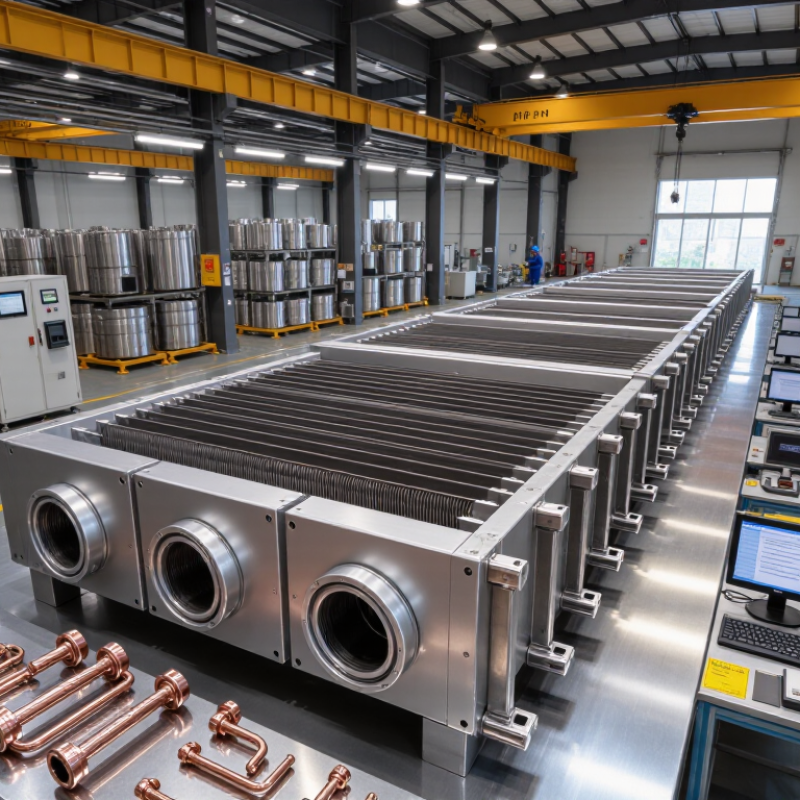
A plate-fin heat exchanger is a compact thermal device built from alternating plates and corrugated fins. The fins enlarge the contact area, while separate passages keep hot and cold fluids apart. Heat crosses the thin walls through conduction, then leaves through the neighboring fluid stream. Many cores support two streams, while advanced designs handle several streams at different temperatures. This arrangement delivers strong heat transfer with low weight and a small footprint. Very compact.
The International Energy Agency reported in Energy Technology Perspectives 2024 that industry consumes nearly 40% of global final energy. The U.S. Department of Energy’s Waste Heat Recovery report estimates that 20–50% of industrial energy input may leave as waste heat. Plate-fin units can recover part of this loss in cryogenic plants, gas processing, aerospace systems, and compressed-air equipment. Engineers calculate heat duty, flow rate, pressure drop, temperature approach, and material compatibility before selecting a core. A reliable supplier should provide thermal calculations, material certificates, leak-test records, and inspection procedures.
The design has compromises. Narrow passages can foul and become difficult to clean. Poor fluid distribution may create cold spots, vibration, or unexpected pressure loss. Aluminum suits many clean gas services, while stainless steel may better tolerate demanding conditions. That is not universal. Field commissioning can expose assumptions that looked acceptable on paper, especially when operating fluids, flow rates, or maintenance intervals change.
A plate fin heat exchanger transfers heat between fluids through alternating layers of plates and fins. Material thermal conductivity is one important factor affecting heat spreading and exchanger performance.
Representative thermal conductivity values at approximately room temperature. Actual values vary by alloy, temperature, and manufacturing condition.
A capable supplier should understand your operating conditions, not only your drawing. Share fluid types, flow rates, temperatures, pressure limits, and allowable pressure drop. Ask how the supplier selects fin height, passage size, alloy, and core thickness. These choices affect heat transfer, vibration, fouling, and service life.
Request manufacturing evidence before placing a large order. Review brazing procedures, material certificates, dimensional records, and pressure-test reports. A reliable factory should explain its vacuum-brazing process and cleaning controls clearly. It should also provide traceability from raw material to finished core. Ask for a sample or a pilot unit. Inspect fin alignment, header connections, weld appearance, and surface cleanliness. Small defects can hide inside narrow passages.
Do not judge quality by price alone. I have seen impressive calculations fail when the actual inlet temperature changed. Require performance verification under agreed test conditions. Check whether the supplier can manage design revisions without losing document control. Communication matters. Technical replies should include figures, assumptions, and realistic tolerances. References from similar industries can reveal delivery consistency and after-sales behavior. A factory may have modern equipment, yet weak inspection discipline. That detail is easy to miss. Supplier evaluation should include an on-site audit when the application is critical, although audits cannot replace independent testing.
Chinese manufacturers produce several plate-fin heat exchanger designs for different operating conditions. Common products include aluminum plate-fin cores, brazed plate-fin units, bar-and-plate exchangers, and customized assemblies with headers, manifolds, and side bars. Aluminum cores are widely used for cryogenic service because they offer low weight and efficient heat transfer. Stainless steel versions suit higher pressure, corrosive fluids, or demanding industrial environments. Details matter.
These products serve air separation, liquefied natural gas, petrochemical, hydrogen, refrigeration, HVAC, marine, and power industries. In air separation plants, compact cores manage nitrogen, oxygen, and other process streams. Refrigeration systems often require small exchangers with controlled pressure drop.
Oil and gas facilities may request larger units with strict leak testing and material traceability. Food and pharmaceutical applications need cleaner surfaces and careful fluid separation.
From practical supplier evaluations, technical communication is as important as production capacity. A reliable manufacturer should provide drawings, thermal calculations, pressure ratings, alloy certificates, and test records. Factory inspection can reveal fin damage, poor brazing, or inconsistent surface treatment.
No factory is ideal. Specifications are often incomplete, and early assumptions can create costly redesigns. Buyers should compare service conditions, flow rates, fouling risks, inspection methods, and after-sales support instead of judging price alone. That gap matters.
China Best Plate Fin Heat Exchanger Supplier?
Quality standards, materials, and manufacturing capabilities should guide your supplier decision. A reliable manufacturer can provide documented quality systems, material certificates, and traceable inspection records. ISO 9001 certification is useful, but it should not replace process evidence. Ask how the supplier controls vacuum brazing, fin alignment, welding, and dimensional tolerances. For pressure applications, confirm whether designs follow relevant standards, such as ASME or EN requirements. Testing should include pressure checks, leak detection, and, when necessary, helium testing. Clear inspection reports matter.
Material selection depends on temperature, pressure, fluid chemistry, and corrosion risk. Aluminum alloys offer low weight and strong thermal performance. Stainless steel, including 316L, may suit more corrosive services, although it can increase cost and manufacturing complexity. Experienced suppliers should explain fin density, plate thickness, headers, and connection options. Their factories may use CNC machining, controlled-atmosphere or vacuum brazing, automated welding, and performance testing. Factory audits can reveal more than a polished brochure. No supplier is perfect.
Tips: Request sample drawings, recent test records, and a complete bill of materials. Check whether production staff can explain failure controls clearly. Compare actual capabilities, not only advertised capacity. Small details, such as clean brazing joints and protected ports, often influence long-term reliability. Reconsider vague answers; they may indicate weak process control.
| Evaluation Dimension | Recommended Technical Benchmark | Typical Materials, Process, or Requirement | Evidence to Request from a Supplier |
|---|---|---|---|
| Design and pressure-vessel compliance | Design should comply with the pressure-vessel code specified for the destination market and service conditions. | Common design frameworks include EN 13445, ASME Boiler and Pressure Vessel Code Section VIII, or an applicable national pressure-vessel standard. | Design calculation, code statement, pressure-temperature rating, material certificates, and notified-body or authorized-inspector documentation where required. |
| Heat-exchanger configuration | Counter-current or cross-flow arrangement selected according to temperature program, pressure drop, and maintenance requirements. | Separating plates, fins, side bars, headers, nozzles, and brazed or welded joints should be defined on the approved drawing. | General arrangement drawing, thermal design report, flow diagram, nozzle schedule, and tolerance-controlled manufacturing drawing. |
| Core and fin materials | Materials must be compatible with the operating fluid, temperature, pressure, corrosion environment, and joining method. | Aluminum plate-fin cores commonly use AA3003 or similar aluminum alloys; clad sheets may use aluminum-silicon brazing alloys such as AA4343 or AA4045. | Heat number traceability, chemical composition report, EN 10204 3.1 material certificate, and confirmation of alloy and temper designation. |
| Header, side bar, and nozzle materials | Headers and connections should have adequate strength, weldability, and corrosion resistance for the selected core material and service. | Typical choices include compatible aluminum alloys for aluminum cores; stainless steel or nickel alloys may be used for specialized fluid and temperature conditions. | Approved material list, welding procedure specification, weld qualification record, and compatibility assessment for dissimilar materials. |
| Brazing capability | Controlled vacuum or inert-atmosphere brazing with documented furnace uniformity and process control. | Aluminum brazing is generally performed near the alloy-specific brazing range, commonly around 590–620 °C; the exact cycle depends on the clad alloy and component design. | Brazing procedure, furnace temperature uniformity survey, calibrated thermocouple records, vacuum or atmosphere records, and batch traceability. |
| Fin geometry and density | Fin type, height, thickness, pitch, and density must be optimized for heat transfer and allowable pressure drop. | Common fin options include plain, serrated, perforated, and offset-strip fins. Fin density is application-specific and is often specified in fins per inch or millimetres per pitch. | Fin specification, dimensional inspection report, sample cross-section, pressure-drop calculation, and airflow or fluid-distribution analysis. |
| Thermal design performance | Quoted duty, outlet temperatures, flow rates, and pressure drops should be supported by a documented thermal model. | Performance depends on fluid properties, fouling allowance, operating pressure, temperature approach, flow arrangement, and fin geometry. | Thermal calculation file, stated assumptions, fluid-property source, fouling factor, predicted pressure drop, and guaranteed performance points. |
| Dimensional and assembly control | Critical dimensions, flatness, nozzle position, core alignment, and brazing distortion should be controlled against the approved drawing. | Inspection should cover core length and width, header position, connection orientation, wall thickness, and dimensional tolerances. | Inspection and test plan, calibrated measurement records, dimensional inspection report, and final as-built drawing. |
| Leak and pressure testing | Every pressure boundary should be tested using a method suitable for the design pressure, fluid, and code requirements. | Typical controls include helium mass-spectrometer leak testing, pneumatic testing, hydrostatic testing where suitable, and separate circuit testing. | Test procedure, calibrated instrument certificates, leak-rate acceptance criteria, pressure-hold records, and signed test reports. |
| Non-destructive examination | NDE should be risk-based and specified for pressure-retaining welds, brazed joints, headers, and critical connections. | Possible methods include visual inspection, dye penetrant testing, radiographic testing, ultrasonic testing, and metallographic examination of qualification samples. | NDE personnel qualifications, inspection procedures, NDE reports, acceptance standards, and representative brazed-joint cross-sections. |
| Surface treatment and corrosion protection | Surface protection should match the environment, storage conditions, operating fluid, and galvanic-corrosion risks. | Options may include cleaning, chemical conversion treatment, anodizing, protective coating, or controlled dry packaging, subject to material compatibility. | Surface-treatment specification, coating or conversion-treatment records, cleanliness standard, and corrosion-protection inspection report. |
| Cleanliness control | Internal cleanliness should be defined for oxygen service, refrigeration, hydrocarbons, chemicals, and other sensitive applications. | Controls may include solvent cleaning, filtered dry-air or nitrogen blowing, particle inspection, moisture control, and sealed end protection. | Cleaning procedure, cleanliness certificate, particle or residue test results, drying record, and packaging photographs. |
| Manufacturing traceability | Materials, brazing batches, operators, inspections, and test results should remain traceable through the complete production route. | A controlled traveler or manufacturing record should link raw materials and process parameters to the final serial number or batch number. | Manufacturing data book, material heat-number map, process traveler, inspection release note, and final certificate of conformity. |
| Quality-management system | Preferred: ISO 9001-certified system | The system should control purchasing, calibration, nonconformities, corrective actions, document revision, subcontractors, and customer complaints. | Valid certificate from an accredited certification body, audit scope, calibration list, nonconformance records, and corrective-action examples. |
| Welding and brazing personnel competence | Personnel should be qualified for the applicable joining process and component materials. | Welding may be governed by applicable qualification standards such as ISO 15614 or ASME Section IX; brazing qualifications should follow the project specification and applicable joining standard. | Welder or operator qualifications, procedure qualification records, training records, and periodic requalification evidence. |
| Testing and engineering facilities | Supplier should have adequate in-house or controlled-access facilities for thermal, pressure, leak, dimensional, and metallurgical verification. | Useful equipment includes calibrated pressure rigs, helium leak detectors, temperature data acquisition, coordinate measurement equipment, metallographic preparation, and thermal-design software. | Equipment register, calibration certificates, laboratory capability statement, sample test reports, and subcontractor-control procedure. |
| Customization and production flexibility | Supplier should be able to adapt core size, fin geometry, circuit arrangement, materials, connections, and test requirements without compromising traceability. | Capability should cover prototype development, engineering change control, low-volume custom units, and repeat production with consistent brazing parameters. | Reference project documentation without confidential customer data, prototype-to-production workflow, engineering-change records, and manufacturing lead-time schedule. |
| Documentation package | Final documentation should be agreed before purchase order release and delivered with the equipment. | A typical package includes drawings, calculations, certificates, inspection records, test reports, operation and maintenance instructions, spare-parts list, and packaging records. | Sample index of a data book, document-control procedure, document delivery schedule, and confirmation of language and format requirements. |

Choosing a plate fin heat exchanger supplier starts with your operating data, not a glossy catalog. Record fluid type, flow rate, inlet and outlet temperatures, pressure, altitude, and allowable pressure drop. The U.S. Department of Energy reports that process heating uses about 51% of industrial energy consumption. A small thermal mistake can therefore increase operating costs for years. Ask suppliers to show their calculation method, test conditions, and margin assumptions. I would also request references from applications with similar temperatures and fluids. A perfect match is rare.
Material selection needs careful attention. Aluminum offers low weight and strong thermal conductivity, while stainless steel may better resist corrosion in demanding environments. ASHRAE guidance emphasizes checking fouling, vibration, leakage risk, and maintenance access during equipment selection. Do not judge performance from heat-transfer area alone. Review fin geometry, brazing quality, pressure rating, inspection records, and replacement lead time. The International Energy Agency repeatedly identifies efficiency as a major industrial energy opportunity, but efficiency can fall quickly when fins become blocked or airflow is poorly controlled.
Tips: Send the supplier a complete duty sheet. Request pressure-drop curves, cleanliness requirements, and a documented warranty. Compare lifecycle cost, not only purchase price. Visit the factory if possible. Ask uncomfortable questions. That is useful. A cheaper unit may become expensive after one difficult shutdown.