What is a Cooling System and How Does It Work?
Cooling systems play a critical role in various industries, ensuring efficiency and reliability. These systems regulate temperatures, preventing overheating in machinery and maintaining optimal conditions in living spaces. The global cooling systems market is projected to reach $160 billion by 2025, reflecting a growing demand for innovative solutions.
Dr. Emily Thompson, a noted expert in thermal management, highlights, "The efficiency of cooling systems can directly impact energy consumption." This assertion underscores the significance of advanced technologies in reducing operational costs and environmental footprints. Yet, many systems still rely on outdated methods, exposing a need for modernizing approaches that embrace sustainability.
Despite technological advancements, challenges remain. Some systems struggle with efficiency and waste levels. To navigate evolving demands, embracing new metrics for performance is crucial. The future of cooling systems lies in innovation, but critical evaluation of existing frameworks is essential as we move forward. Reinventing cooling strategies can drive industry improvements while meeting societal needs.
What is a Cooling System?
A cooling system is an essential mechanism designed to regulate temperature in various environments. It plays a crucial role in both residential and industrial settings. At its core, a cooling system removes heat from an area, maintaining a comfortable and efficient atmosphere. While many think of air conditioning, cooling systems also include refrigeration units and cooling towers.
The operation of a cooling system involves transferring heat away from the designated space. This process relies on refrigerants, which absorb heat from the air and release it elsewhere. Components such as compressors, evaporators, and condensers work together to ensure optimal performance. Even in advanced systems, occasional hiccups can occur. For instance, the refrigerant might leak, leading to reduced efficiency.
Cooling systems demand regular maintenance to function at their best. Dust and debris can hinder airflow, diminishing effectiveness. It’s important to be proactive about servicing these systems. Over time, components may wear out, necessitating repairs. System failures can lead to unpleasant surprises, underscoring the need for reliable operation. Regular check-ups ensure that you can enjoy the benefits of a well-running cooling system.
What is a Cooling System and How Does It Work?
| Cooling System Type |
Description |
Applications |
Advantages |
Disadvantages |
| Air Cooling System |
Uses air as a cooling medium, typically with fans. |
Computers, buildings, vehicles. |
Simple design, low cost. |
Less efficient in high temperatures. |
| Liquid Cooling System |
Utilizes liquid (usually water or coolant) to remove heat. |
High-performance PCs, industrial machinery. |
Highly efficient, effective at high loads. |
More complex, potential for leaks. |
| Refrigeration System |
Removes heat from a designated area by using refrigerants. |
Refrigerators, air conditioners. |
Effective cooling, versatile use. |
Environmental concerns with refrigerants. |
| Evaporative Cooling System |
Cools by evaporating water, using less energy. |
Deserts, climates with low humidity. |
Energy-efficient, lowers temperature and humidity. |
Less effective in high humidity environments. |
Purpose of Cooling Systems in Various Applications
Cooling systems play a vital role in various applications, significantly impacting efficiency and performance. In industrial settings, for instance, these systems maintain optimal temperatures for machinery. Reported by the International Journal of Cooling Technology, improper cooling can increase equipment failure rates by up to 30%. This statistic highlights the urgent need for robust cooling solutions in preventing costly downtime.
In the automotive industry, efficient cooling systems are crucial for engine performance. The Society of Automotive Engineers reveals that a 10% decrease in engine temperature can lead to a 3% increase in fuel efficiency. However, balancing performance with energy use is a challenge. Many systems struggle to maintain efficiency without consuming excessive power. Regular maintenance and innovation are essential for addressing this issue.
Moreover, in data centers, cooling systems are responsible for the reliability of servers. According to a report by the Uptime Institute, 30% of data center outages are linked to cooling failures. As data demands grow, ensuring effective cooling is more critical than ever. Companies must reflect on their cooling strategies to prevent these failures and meet scalability needs.
Key Components of a Cooling System and Their Functions
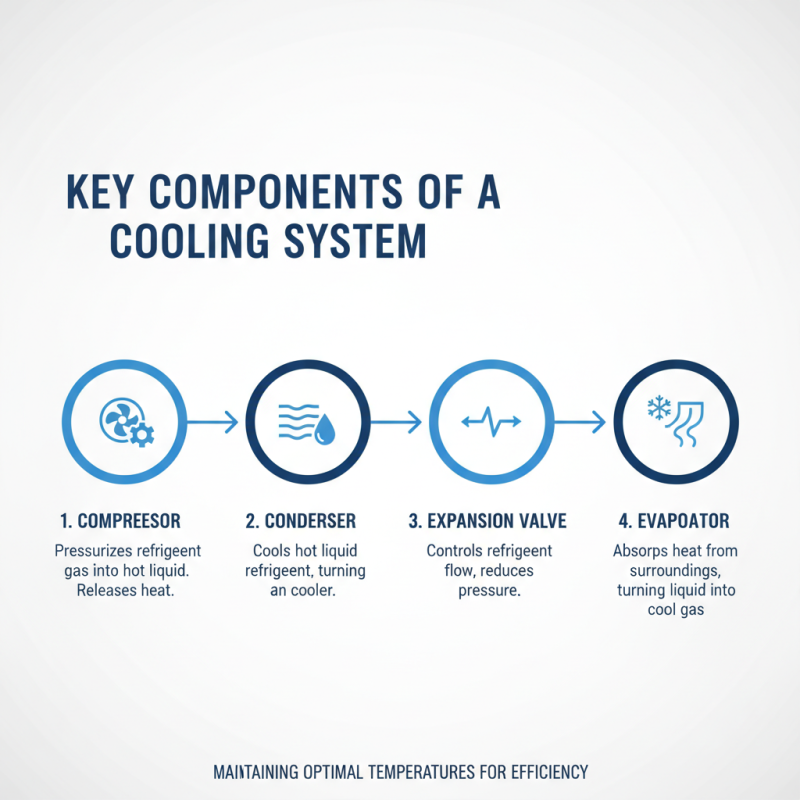
A cooling system is essential for maintaining optimal temperatures in various applications, from vehicles to industrial equipment. Understanding its key components is vital for efficiency. The primary components include the compressor, condenser, evaporator, and expansion valve. The compressor pressurizes refrigerant, transforming it from a gas to a liquid. This process releases heat, preparing it for the next stage.
The condenser cools the pressurized refrigerant, allowing it to release heat to the surroundings. This is crucial for effective temperature regulation. The evaporator absorbs heat from the environment as the refrigerant converts back to a gas, creating a cooling effect. Finally, the expansion valve controls the refrigerant flow, ensuring that it moves smoothly through the system. Industry reports indicate that an efficient cooling system can improve energy savings by up to 30%, highlighting the importance of each component's function.
Tips: Regular maintenance of these components can prevent inefficiencies. Keep the condenser clean to avoid heat buildup. Monitor the system for leaks, as even small issues can impact performance. An investment in quality components often pays off in the long run, but always consider the specific needs of your system to avoid overspending on unnecessary upgrades.
How Cooling Systems Regulate Temperature Effectively
Cooling systems play a vital role in regulating temperature across various environments. They are essential not just for comfort, but also for preserving temperature-sensitive items. These systems work by absorbing excess heat and expelling it outside. They often include components like compressors, condensers, and evaporators. Each piece has a specific job to do in maintaining the right temperature.
Efficient cooling hinges on the balance between heat removal and the temperature of the surroundings. In many cases, the system struggles during extreme heat events. This is where maintenance becomes crucial. Regular checks can help avoid breakdowns. Common issues include refrigerant leaks and fan failures, which can impact performance significantly.
An effective temperature regulation system adapts to changing conditions. It can sometimes fail to anticipate fluctuations. This unpredictability can lead to inefficiencies, costing more in energy use or repair expenditures. A user’s role is to monitor system performance regularly. Awareness of its limitations allows for timely adjustments. Ensure air filters are clean and vents are unobstructed. This simple practice enhances system reliability and longevity.
Common Types of Cooling Systems and Their Mechanisms
Cooling systems are essential in numerous settings, from homes to industrial environments. They work by removing heat from a designated area to maintain a comfortable and safe temperature. Understanding common types of cooling systems can enhance your knowledge and help in making informed decisions.
Air conditioning units are prevalent. They use refrigerants to absorb and release heat. This process cools the indoor air effectively. Evaporative coolers are another option, utilizing water to cool air through evaporation. This method is energy-efficient but works best in dry climates. Refrigeration systems are crucial in food storage, employing a cycle of compression and expansion to maintain low temperatures.
Tips: Regular maintenance is vital for all cooling systems. Check filters monthly and clean coils to ensure efficient performance. This simple step can prevent costly repairs. Be cautious of noise or unusual smells, as they may indicate underlying issues.
Remember that proper sizing is crucial for efficiency. An oversized unit can lead to frequent cycling, wasting energy. Conversely, a too-small system may not cool adequately. Seek professional advice when choosing or maintaining your cooling system. Adjust parameters as needed and stay informed about the latest technologies in cooling solutions.